Novel vs Book The Real Difference and Why It Matters
Overview
Introduction
Have you ever called a stack of papers on your nightstand "my novels" when some of them are actually memoirs? Or told a friend you just finished a "book" only to realize they expected a non-fiction read, while yours was a made-up story? You are not alone with this confusion. Many readers and even writers use the words "book" and "novel" as if they mean the exact same thing. But here is the truth: they do not.

A book is a physical or digital object that contains written words. It is a container. A cookbook is a book. A biography of a historical figure is a book. A collection of poetry is a book. A novel, on the other hand, is a specific type of book. Generally, a book is considered to be a novel if it is long, written in prose, and tells a fictional story Thesaurus.com. In other words, all novels are books, but not all books are novels.
This article will clear up the distinction once and for all. We will look at the definitions, the history behind these terms, how structure differs between them, and why this actually matters for your reading and writing life. Whether you love diving into popular fiction books, exploring classic jane austen books, or browsing the jewish review of books for your next great read, knowing the difference helps you talk about what you love with greater precision.
By the end of this guide, you will know exactly when to call something a book versus a novel. You will also understand why that distinction matters for your own reading and writing journey. And if you are on the hunt for your next laugh out loud read, we have you covered over at our collection of funny books for adults that will make you smile. Let us begin.
Definitions and Core Distinctions
Let’s get really clear on what each word means. Once you see the difference, you will never mix them up again.
What is a book? A book is any collection of written or printed pages that are bound together. It is the container. Think of it like a bag. A bag can hold groceries, gym clothes, or a lunch. A book can hold a cookbook, a biography, a poetry collection, a textbook, or a novel. The word “book” covers everything from your kid’s coloring book to that thick history tome on your shelf. Books can be fiction or non-fiction. They can be long or short. They can be about anything.
What is a novel? A novel is a very specific kind of book. It is a long, fictional story written in prose. That means it is made up and told in regular sentences (not poetry). A novel dives deep into characters, settings, and plot. You get to know the people in the story. You follow their journey from beginning to end. Think of Pride and Prejudice by Jane Austen or The Hunger Games by Suzanne Collins. Those are novels. They are stories that the author invented.
Here is the simple rule to remember: all novels are books, but not all books are novels. That is the core distinction. The difference lies in two things: fiction and length.
A novel must be a made-up story, and it must be long enough to build a full narrative. A short story is not a novel. A picture book is not a novel. A biography of Abraham Lincoln is a book, but it is not a novel because it is true.
Let’s look at some examples to make it stick. Jane Austen books like Sense and Sensibility are novels. They are fictional stories about love and society. On the other hand, a cookbook full of pasta recipes is a book, but not a novel. A collection of essays from The Jewish Review of Books is a book, but not a novel. Even some popular fiction books blur the line. You might pick up a book by Mitch Albom and wonder: is this a novel or a memoir? That confusion shows why knowing the terms matters. If you want to explore more examples of novels you can enjoy right now, check out our list of 10 dystopian novels like The Hunger Games for some top recommendations.
One common misunderstanding is thinking that every thick book must be a novel. Not true. Textbooks, technical manuals, and true crime stories can be just as long. The key is whether the content is invented. A novel tells a story the author made up. A non-fiction book tells facts about the real world. That is the simple test.
Romance novels are a great example of a specific novel genre. They are fictional stories focused on romantic relationships. Some people think romance novels are only about physical intimacy, but in reality, they are just as much about emotional connection, as this article on 10 Myths About Romance Novels explains. That is a perfect illustration of how novels, as fictional works, can explore any human experience.
So next time you pick up a book, ask yourself: “Is this a true story or a made-up one?” If it is made up and long enough, you have a novel in your hands. If it is any other kind of written material, it is just a book. Simple, right?
Historical Origins
Now that we have the definitions straight, let’s look at where these two ideas come from. The difference between a novel vs book makes a lot more sense once you know their history. Actually, the word “book” is thousands of years old, while “novel” is a much newer term. That alone explains why they are not the same thing.
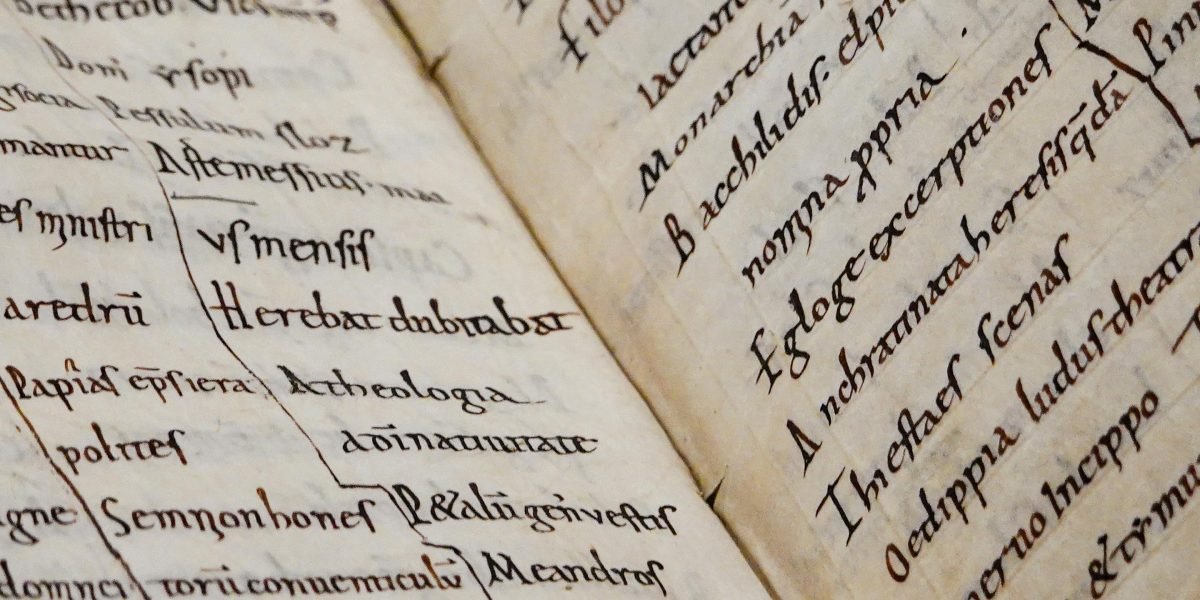
Books have been around for a very long time. People wrote on clay tablets in ancient Mesopotamia. Then came scrolls made from papyrus. Around the 2nd century AD, the codex appeared. That’s the bound book you know today, with pages you turn. For centuries, all books were handwritten by scribes. It was slow and expensive. Then in the 15th century, the printing press changed everything. Books became cheaper and more common. The evolution of the book is a fascinating story of how we moved from stone tablets to the paperback in your bag.
But none of those early books were novels. They were religious texts, histories, legal records, and scientific works.
The novel is a baby compared to the book. Most scholars agree that the modern novel started taking shape in the 18th century. A source from the American Board explains that the novel “began taking shape during the eighteenth century, and during the next century, it continued to evolve.” That’s when writers started creating long, fictional stories about ordinary people. Two early giants are Don Quixote (published in two parts, 1605 and 1615, often called the first modern novel) and Robinson Crusoe (1719). Some experts, like Margaret Doody, argue the novel has roots going back two thousand years to ancient Greek and Roman stories. But the form we recognize today really bloomed in the 1700s.
Why did the novel appear then? Because society changed. More people could read. They had more leisure time. And they wanted stories about characters like themselves. The English novel developed quickly in the 18th century, with authors like Samuel Richardson and Henry Fielding. Jane Austen came along in the early 1800s and perfected it. So the next time you pick up a Jane Austen book, remember you are holding a piece of history.
This timeline helps you see why the novel vs book distinction matters. A book is the container that has existed for millennia. A novel is a specific type of story that only became popular a few hundred years ago.
So when someone says, “I’m reading a book,” they could mean anything from a cookbook to a history of World War II to a novel. But when they say, “I’m reading a novel,” you know they are diving into a made-up world.
Understanding where these terms came from makes you a smarter reader. And if you enjoy the lighter side of literature, check out our list of funny books for adults to see how the novel form has evolved into laugh-out-loud entertainment.
Structural Elements
Now let’s get into the nuts and bolts. When you look at the novel vs book debate from a structural angle, the difference becomes crystal clear. Think of it this way: a book has a physical body, and a novel has a story skeleton.
They are two completely different kinds of structure.
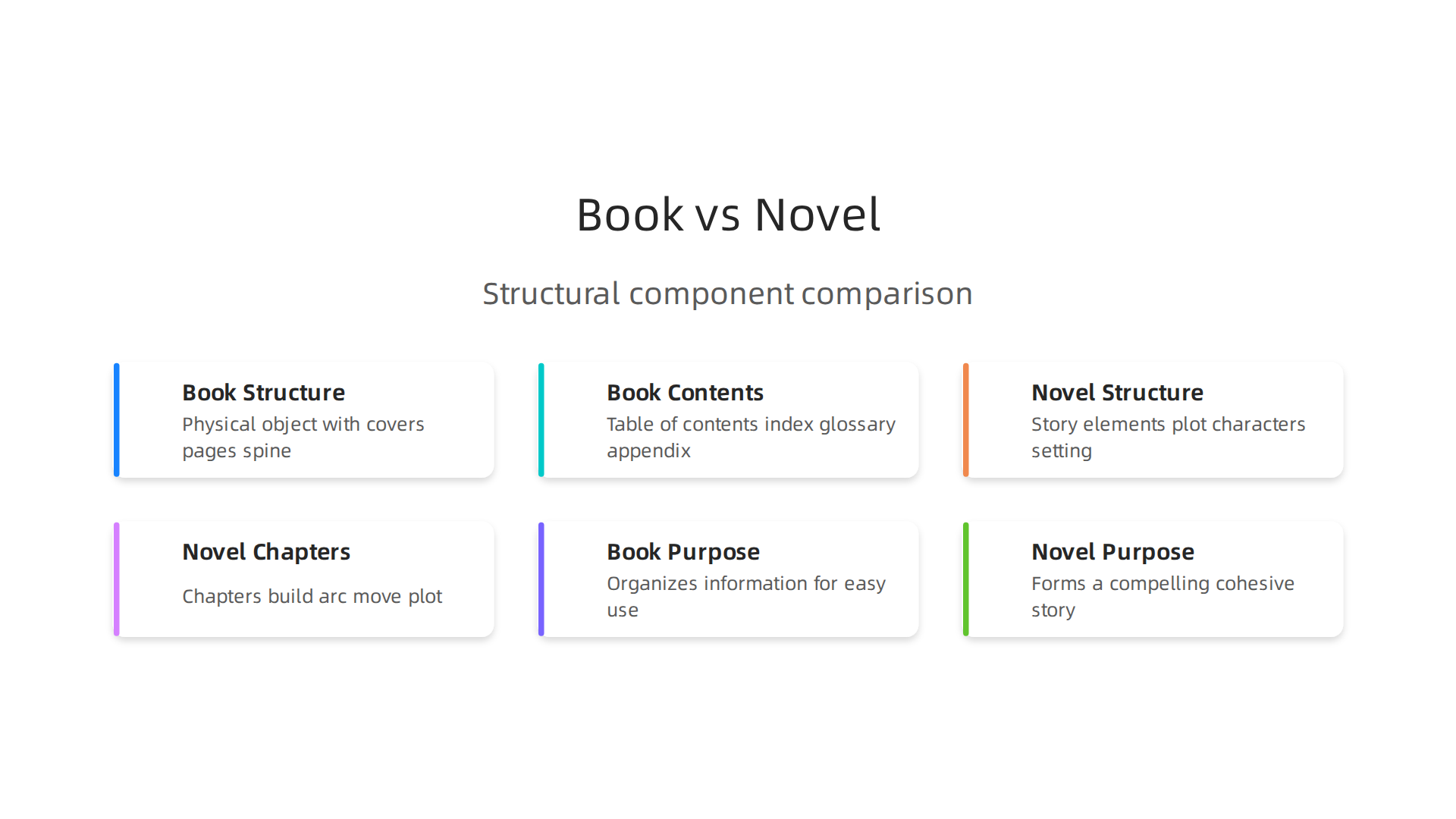
A book is a physical object. It has covers, pages, a spine, and binding. You can hold it, stack it, or put it on a shelf. Many books also include extra parts like a table of contents, an index, a glossary, or an appendix. These parts help you find information fast. A cookbook, for instance, might have an index of ingredients. A textbook often has a glossary of terms. This physical structure is all about organizing information so you can use the book easily. The Writer’s Digest article on the top elements of a book points out that even the surface structure, grammar, punctuation, and spelling matters a lot to readers.
A novel is different. Its structure is all about story. Novels are built from elements like plot, characters, setting, point of view, theme, and style. According to the Atmosphere Press guide on the seven elements of a novel, these pieces work together to form a compelling, cohesive story. Chapters in a novel are not just random sections. They build a story arc. Each chapter moves the plot forward or deepens a character. The National Centre for Writing explains that structure exists in any story, even when you tell a funny anecdote to a friend. You naturally follow a shape. A novel just does it with more care and craft.
Here is the key difference: a book can hold many novels, but a novel is always one single story. Think about an anthology. That is a book that collects multiple short stories or even multiple novels by different authors. The book is the container. The novels inside are the content. But when you pick up a single novel, you are getting one complete narrative from start to finish. That is why the novel vs book distinction matters so much for readers. If you grab a book, you might be getting anything. If you grab a novel, you know you are in for a story with a beginning, middle, and end.
Understanding structure helps you become a faster, cleaner reader and writer. As Kristen Lamb puts it, structure is essential to all stories, from screenplays to novels to epic space operas. And Jami Gold reminds us that from our youngest days of reading, we have seen that stories have a shape. So the next time you read a Jane Austen book or any popular fiction books, pay attention to both structures. Notice how the physical book feels in your hands and how the story unfolds inside it.
If you want to explore more about how storytelling works, check out our guide on how to find funny novels in 2026 without the overwhelm. It helps you spot good story structure even when you are just looking for a laugh.
Genres and Categories
Have you ever grabbed a book expecting a deep dive into history and ended up with a historical romance novel? Or picked up a novel thinking it was a true crime story? The confusion usually comes down to one thing: genre. Once you understand how genres and categories work, the novel vs book confusion starts to fade away.
Now that we have looked at how structure separates a novel from a book, let’s look at the labels on the cover. Genre is like a map. It tells you what kind of journey you are about to take.
Books cover just about everything. The world of books is huge. It includes fiction, non-fiction, poetry, drama, textbooks, biographies, cookbooks, and self-help guides. According to the Wikipedia list of writing genres, the range of literary categories is massive. A guide from Southern New Hampshire University explains that understanding these broad categories is the first step for any reader. Palmetto Publishing puts it simply: most books fall into either fiction or non-fiction. A book is the big umbrella that holds everything. It is genre-agnostic.
A novel, however, is always fiction. It is a specific type of story.
And inside the fiction world, novels break down into even more specific genres. You have romance, science fiction, mystery, fantasy, literary fiction, thriller, horror, and many more. The Novelry’s guide on book genres does a great job explaining how these categories matter for writers. Reedsy’s list of 35 popular book genres shows just how many flavors a single novel can have.

Jane Friedman also offers a high-level overview on why genre is so important for both commercial and literary fiction. This means every Jane Austen books you pick up fits into a very specific type of fiction. The same goes for most popular fiction books you see on the shelves today.
Whether you are browsing the jewish review of books or scrolling through a general bestseller list, knowing the genre helps you pick the right read. If you are in the mood for a lighthearted escape, you might look for humorous fiction. Our guide to humorous YA books to read after Suzanne Collins’ dystopian series shows how even within a popular genre, sub-genres and tones can completely change your experience.
So what does this mean for the novel vs book debate? When you understand that a "book" is the big category, you stop expecting one thing from another. If you want to learn a skill, you look for non-fiction. If you want to escape into a made-up world, you look for a novel. And within that novel, you choose your flavor. That is the real power of knowing your genres.
Why the Distinction Matters
You might think the novel vs book question is just trivia. But honestly, it changes everything. Whether you are a reader, a writer, or someone who just loves collecting books, knowing the difference saves you time, confusion, and sometimes money.
For Readers
When you search for a good read, terms matter. If you type "best jane austen books" into a search engine, you already know you want novels. Jane Austen wrote fiction. If you instead search for "jewish review of books," you will get a magazine that reviews all kinds of books, not just novels. Knowing the difference helps you land exactly what you want.
Novels follow specific story elements. According to Atmosphere Press, every novel has seven core parts like plot, character, and setting. When you understand these, you know what to expect before you even open the cover. That means fewer disappointments and more time spent reading popular fiction books that actually match your mood.
If you love humorous fiction, knowing you want a novel (not a non-fiction how-to guide) helps you find the right recommendations fast. Our guide on how to find funny novels in 2026 without the overwhelm shows you exactly how to cut through the noise.
For Writers
If you are a writer, the novel vs book distinction matters even more. Publishers and agents need to know immediately what you are pitching. A novel submission goes into a completely different pile than a non-fiction proposal.
Understanding novel structure is a huge advantage. Kristen Lamb explains that mastering story structure helps writers become faster and cleaner. When you know the difference between a novel and other book types, you can focus on the right craft techniques for your form.
For Collectors and Academics
Librarians, book reviewers, and collectors rely on precise terms. Cataloging a novel correctly means readers can find it when they search for fiction. Academic research about novels vs. other books depends on clear labels. Even a publication like the Jewish Review of Books uses categories to guide its readers.
In every case, understanding the novel vs book difference makes your reading life simpler. It turns guesswork into confidence.

Common Misconceptions
Even after reading the novel vs book breakdown, a few myths tend to stick around. Let’s clear up the biggest ones right now.
"All books are novels"
This is probably the most common mix-up. A cookbook is a book. A biography is a book. A textbook is a book. But none of them are novels. Novels are a specific type of book that tells a fictional story. So when someone says they love "Jane Austen books," they are correct. But when they say every book must be a novel, they are wrong. Non-fiction works like the ones reviewed in the Jewish Review of Books prove that point daily.
"Length alone determines a novel"
You might hear people say a novel has to be long. That is mostly true. But it is not the only rule. Some novels are quite short. These are called novellas. They still have characters, plot, and setting. They just say it in fewer pages. So length matters, but it is not the only thing that makes a novel a novel.
"Novels are always fiction"
This one is actually true. Novels are always fiction by definition. But here is where it gets tricky. Some formats blur the lines. Graphic novels tell fictional stories using art and text together. Verse novels use poetry to tell a story. They are still novels. They just look different on the page. And some books that look like novels, like creative non-fiction, are actually true stories written in a novel style. That is where the novel vs book confusion really lives.
These myths stick around because people use the words loosely. But once you know the truth, everything gets easier. You understand what you are reading, what you are writing, and what you are looking for next.
If you love reading funny stories, you might enjoy our collection of funny books for adults that will make you laugh out loud. These are novels, not non-fiction, so you know exactly what you are getting.
Contemporary Trends and Digital Formats
The novel vs book conversation has changed a lot in recent years. Why? Because the way we read has changed. E books and audiobooks have opened up new ways to enjoy stories. And that has made the old definitions a little fuzzy.
Here is what is happening right now.
Digital formats expand what a "book" can be
A book used to mean paper pages between two covers. That is not true anymore. E books let you carry thousands of titles on a single device. Audiobooks let you "read" while you drive, cook, or walk. These are still books in the sense that they contain written (or spoken) content. But they are not physical objects. The definition of "book" has stretched to include digital files and audio recordings.
According to the Wikipedia entry on the novel, the form has "a continuous and comprehensive history of about two thousand years." That history now includes digital versions. The novel adapted to e readers and streaming. And it is still the same fictional story underneath.
Novels are published in multiple formats at once
These days, a single novel often comes out as a hardcover, paperback, e book, and audiobook all on the same day. That is great for readers. You can pick the format that fits your life. But the novel stays a novel. It is still a long fictional narrative. The format does not change that.
Reading habits show that fiction novels remain the most popular digital book category. The American Board notes that the modern novel "evolved into the most popular literary form" during the nineteenth century. That popularity has carried over into the digital age. People love sinking into a made up story on their phone or tablet just as much as on paper.
What this means for you
So when you hear "book" today, think of a container. It can be paper, pixels, or sound. When you hear "novel," think of the content inside that container. A fictional story. That distinction helps you know what you are looking for.
If you want to explore some great novels in digital form, check out our guide on how to find funny novels in 2026 without the overwhelm. It shows you exactly where to look for the best humorous fiction in any format.
How to Apply: Choosing Between Book and Novel
Okay, so now that you know the difference between a novel and a book, how do you actually use this in real life? Whether you are hunting for your next great read or trying to classify your own writing, this simple novel vs book breakdown helps a lot.
For readers searching for their next story
When you want to find a fiction story to get lost in, use the word "novel." It narrows your results to long, made-up narratives. You want a mystery, a romance, or a science fiction adventure? Just search for "best mystery novels" or "top science fiction novels of 2026." If you search only "book," you will get everything. Cookbooks, biographies, history texts. The novel vs book distinction saves you time.
For example, if you are in the mood for a specific type of fiction, checking out a curated list helps. Take a look at our guide to 10 dystopian novels like The Hunger Games to see how targeted novel recommendations work. To dive even deeper into categories, Reedsy has an ultimate list of 35 popular book genres that helps narrow down your choice even further.
For writers classifying their work
If you are a writer, getting this right is huge. Agents and publishers need to know exactly what you have written. Calling your 80,000 word fiction manuscript a "book" is too vague. Labeling it a "novel" immediately sets the right expectation. You also need to nail down your specific genre. Is it literary or commercial? The Novelry explains why fiction categories matter for marketing and selling your book. Author coach Jane Friedman also emphasizes that knowing your genre is the key to reaching the right readers.
If your writing leans toward character driven stories with a touch of humor, you might find inspiration in our list of Liane Moriarty books that readers love. Understanding where your novel fits in the marketplace is a critical step.
For readers building their TBR list
For readers building a "To Be Read" (TBR) list, the novel vs book idea helps you set better goals. Maybe you want to read 12 novels this year. Or maybe you want to mix in some non fiction books too. If you set a goal to read more "popular fiction books," you know you are looking for widely loved stories. If you set a goal to read more "books," you might pick up a biography or a collection of essays.
For a mix of fiction and non fiction that surprises and delights, check out our recommendations for authors like Malcolm Gladwell. And if novels are your true love, do not miss our tips on how to find funny novels in 2026 without the overwhelm.
Southern New Hampshire University offers a great literary guide on types of genres that explains how these categories influence both writing and reading choices. Knowing the difference helps you every step of the way.
Quick reference: When to use which term
| Your Goal | Reach for "Novel" | Reach for "Book" |
|---|---|---|
| Find a fictional story to read | Yes (narrows results) | Yes (but results are wider) |
| Find non fiction or reference material | No | Yes (e.g., "history books") |
| Write and pitch to an agent | Yes (defines the form clearly) | Only if it is non fiction |
| Set a personal reading goal | Yes (e.g., "read 12 novels") | Yes (e.g., "read 20 books") |
Summary
This article explains the clear difference between a book and a novel: a book is the physical or digital container of written content, while a novel is a specific kind of book — a long, fictional story told in prose. It covers precise definitions, historical origins, and the structural elements that set novels apart (plot, character, setting, arc), and shows how genres and modern digital formats affect what readers find. The guide highlights common confusions — like novellas, graphic and verse novels, and creative non‑fiction — and explains why the distinction matters for searching, cataloging, pitching to agents, and setting reading goals. By the end, readers and writers will know when to call something a novel, how to find the right titles, and how to classify or market their own work more effectively.