
The Giver Book A Deep Dive into Lois Lowry’s Dystopian Classic
Overview
Introduction: Why readers keep returning to The Giver
Some books just stay with you long after you turn the last page. The Giver by Lois Lowry is definitely one of them. For many, reading the giver book in school was a first look into big ideas about society and what it means to be truly human.

Even today in 2026, this powerful story remains a favorite for students and adult readers alike. It makes us think about our choices and the kind of world we want to live in.
The Giver tells the story of Jonas, a boy who lives in a world that seems perfect. Everyone is polite, there is no pain, and life is orderly. But this peace comes at a high price: there is also no color, no music, no real love, and no memory of the past. Jonas learns this hard truth when he is chosen to become the Receiver of Memory. Through this special job, he starts to see his community’s hidden history and dark secrets. This kind of story, often called a dystopian novel, shows us what could happen if society tries to control everything. If you enjoy thought-provoking stories, you might also like to explore other 10 dystopian novels like The Hunger Games.
The book’s lasting appeal comes from its deep questions. It makes us wonder about freedom versus safety, the importance of feelings, and why remembering the past matters. Because of these big themes, The Giver is often part of school lessons across the country, showing how a society can choose to suppress memories and pain for its people’s comfort 2026 course catalogs show it is still being taught in schools like Pinewood School. 2025–26 Course Catalog – Pinewood School.

The book is also known as the first of the Giver Quartet, a series of four books by Lois Lowry that continues Jonas’s journey and explores this unique world further. Lois Lowry’s Giver Quartet.
In this guide, we’ll dive deep into the giver book. We’ll look at the world it creates, its most important themes, and why it’s still counted among the best fiction books today. We will also suggest other books that share similar feelings or ideas, like some by authors such as Judy Blume books or the Left Behind novels, and even popular series such as Throne of Glass books. By the end, you will have a full understanding of this classic and ideas for what to read next.
1. The Giver in context: publication, audience, and historical background
To truly understand why the giver book holds such a special place, it helps to look at when and how it came out. Lois Lowry first gave us The Giver in 1993. This was a time when many important books for young readers were being published. Lowry’s book quickly stood out because it tackled big, complex ideas in a way that even younger readers could grasp.
When it first came out, The Giver was aimed mostly at what we call a "young adult" audience. This usually means kids from middle school age up through high school. However, the story’s powerful messages and simple yet deep writing style made it popular with a much wider group. Many adults also found themselves drawn into Jonas’s world, thinking about the story long after they finished it. It’s truly a book for a The Giver by Lois Lowry intended for a general audience.
The reason the giver book appeals to so many is its smart way of sharing big thoughts. It explores what happens when a society tries to make everything perfect by taking away people’s feelings and memories. This kind of story is called dystopian fiction. Even though it was written decades ago, its questions about freedom, safety, and human connection are still important in 2026. This is why it continues to be one of the best fiction books that schools and families choose to read together. It sparks important talks about what makes a community good and what makes us truly human.

If you’ve ever wondered about the precise differences between these terms, it might be helpful to learn about the Novel vs Book: The Real Difference.
2. Plot overview and core themes (concise and spoiler-aware)
Now, let’s dive into what the giver book is actually about. We will keep this part short to avoid giving away too many surprises!
The story is about a boy named Jonas who lives in a world that seems perfect. Everyone is polite, everything is orderly, and there’s no pain or war. But there’s also no real joy, no color, and no deep feelings. People don’t make big choices for themselves. When children turn twelve, they get their life’s job at a special event called the Ceremony of Twelve. Jonas gets a very rare job: he is chosen to be the next Receiver of Memory.
This job is very important and very lonely. Jonas begins to train with an old man who is called The Giver. The Giver holds all the memories of the world that came before, both good and bad. Jonas learns about colors, music, strong feelings like love and sadness, and even pain. This new knowledge changes how he sees his calm, orderly community, which works hard to suppress memories and pain from everyone else society that suppresses memories. The more Jonas learns, the more he questions his world.
Important Themes in The Giver
The Giver makes us think about many big ideas:
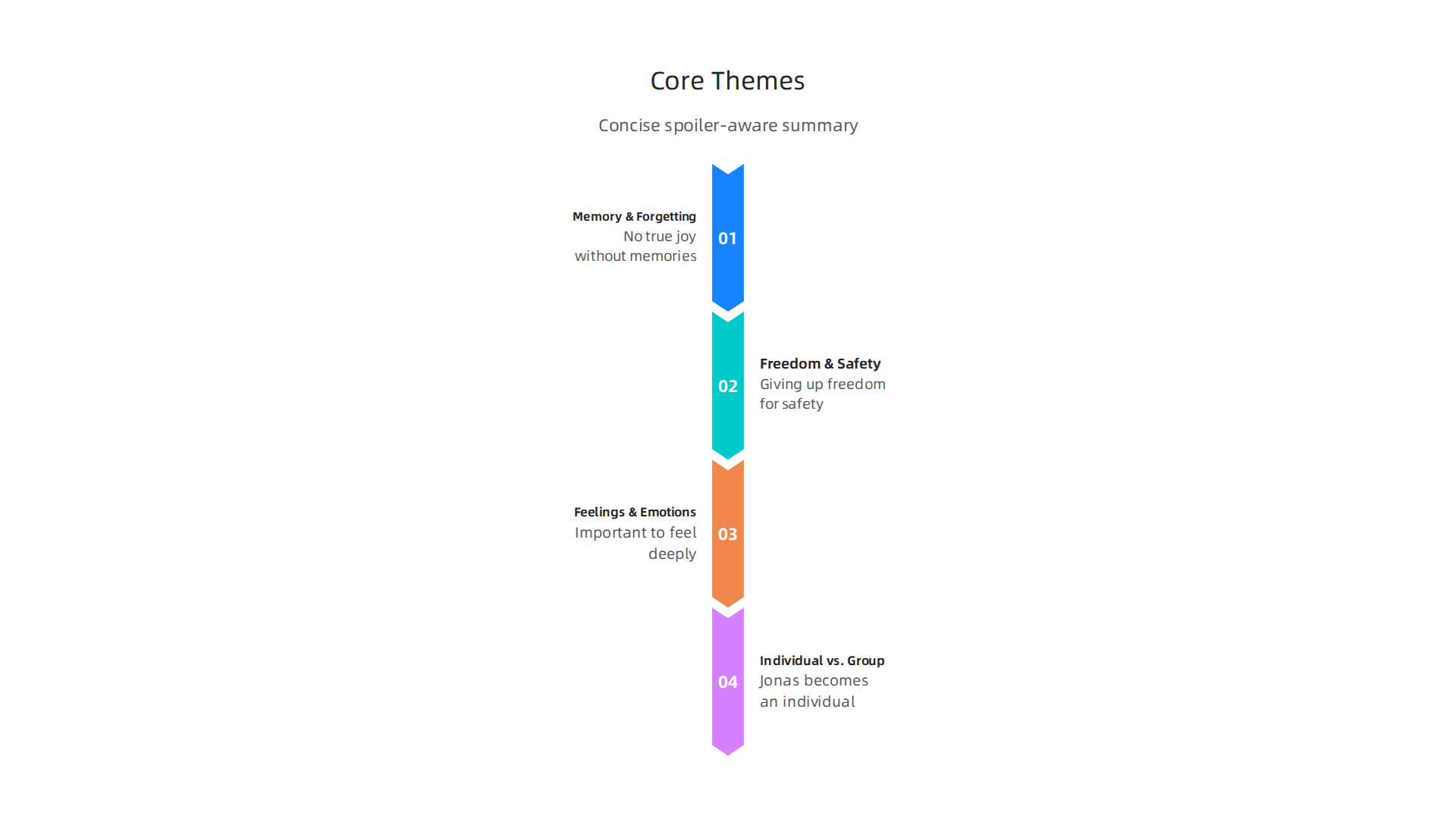
- Memory and Forgetting: The book asks if it’s better to remember everything, even the bad stuff, or forget it all for a peaceful life. Jonas learns that without memories of pain, there can be no true joy.
- Freedom and Safety: The people in Jonas’s community are very safe, but they have no freedom to choose anything important. The story makes us wonder if giving up freedom for safety is worth it.
- Feelings and Emotions: In Jonas’s world, feelings are dulled. He learns how important it is to feel deeply, even if it means feeling sad or hurt sometimes.
- The Individual vs. The Group: Jonas starts as just one part of the community. But as he gets the memories, he becomes an individual with special knowledge, which sets him apart from everyone else.
These ideas are still very important in 2026. We often think about how technology changes our lives, how much information we share, and what truly makes a good society. Reading the giver book helps young readers and adults explore these questions.

If you enjoy stories that make you think about society and the future, you might also like these 10 dystopian novels like The Hunger Games.
3. Characters and world-building: what to notice on a re-read
When you read the giver book again, you might notice even more about its characters and the world they live in. The way Lois Lowry built this community is very special. Each part helps us understand the story’s big ideas.
Key Characters to Watch Closely
- Jonas: Of course, Jonas is the main character. On a second read, pay attention to his small reactions before he gets the memories. How does he follow rules without question? How do his friendships with Fiona and Asher look different once he knows more? His journey from innocent boy to questioning young man is the heart of the giver book.
- The Giver: This old man holds all the world’s real history. When you re-read, notice how lonely he is and how much he cares for Jonas. He teaches Jonas about feelings and memories, making him a very important mentor.
- Gabriel: This little newchild changes Jonas’s life in many ways. Gabriel shows Jonas what true, deep love can feel like. Watching Jonas protect Gabriel helps us see how much Jonas has grown and how much he values life and emotion.
- Jonas’s Family and Friends: Characters like Lily, Fiona, and Asher seem happy in their world. But on a re-read, you might notice their simple joys and easy compliance with rules. This makes Jonas’s new knowledge stand out even more.
World-Building Elements to Explore
The world in the giver book is called the Community. It’s built on ideas like "Sameness," which means everyone is alike, and things are always orderly.
- The Rules and Rituals: Everything in the Community has a rule. From what you say to how you act, rules control daily life. There are also important ceremonies, like the Ceremony of Twelve where children get their jobs. These rules and ceremonies take away personal choice, but they also keep everyone safe. Many schools use books like this to help students think about society and rules DigitalCommons@Kennesaw State University app-uh-latch-uh.
- No Strong Feelings, No Color, No Music: This is a big part of the world. People don’t feel true joy or deep sadness. They don’t see colors or hear music. The Community believes this keeps everyone calm and prevents pain. But it also takes away much of what makes life rich and beautiful.
- "Release": This word is used in a gentle way in the book, but its true meaning is very harsh. Paying close attention to how "release" is talked about by the adults, and how Jonas slowly understands it, is a powerful moment in the story.
Prompts for a Deeper Re-Read
- Look for Clues: The first time you read, you might miss small hints about the past or the world’s true nature. When you read it again, see if you can spot these clues earlier.
- Notice Language: How do people in the Community talk? They use very precise words and often avoid expressing strong feelings. This is a subtle way the book shows how their lives are controlled.
- Jonas’s Growing Awareness: How does Jonas’s view of his friends and family change after he receives memories? Does he see them differently? Does he feel more alone?
Reading the giver book more than once can open your eyes to new details and make you think about the story in different ways. It’s interesting how novels, whether fiction or non-fiction, can make us see the world anew. If you want to understand the different kinds of stories we read, you might like to learn about the difference between a novel vs book.
Reading the giver book helps us understand important lessons, which is why it’s seen as a modern classic for both young people and grown-ups. It’s a special story that has touched many hearts since it first came out.
Why It’s a Book for Everyone
One big reason the giver book is so loved is how easy it is to read, but also how deep its ideas are. Lois Lowry uses simple language, so teens can easily understand the story of Jonas. But adults will find themselves thinking about the same big questions for a long time. The story makes you wonder about things like:
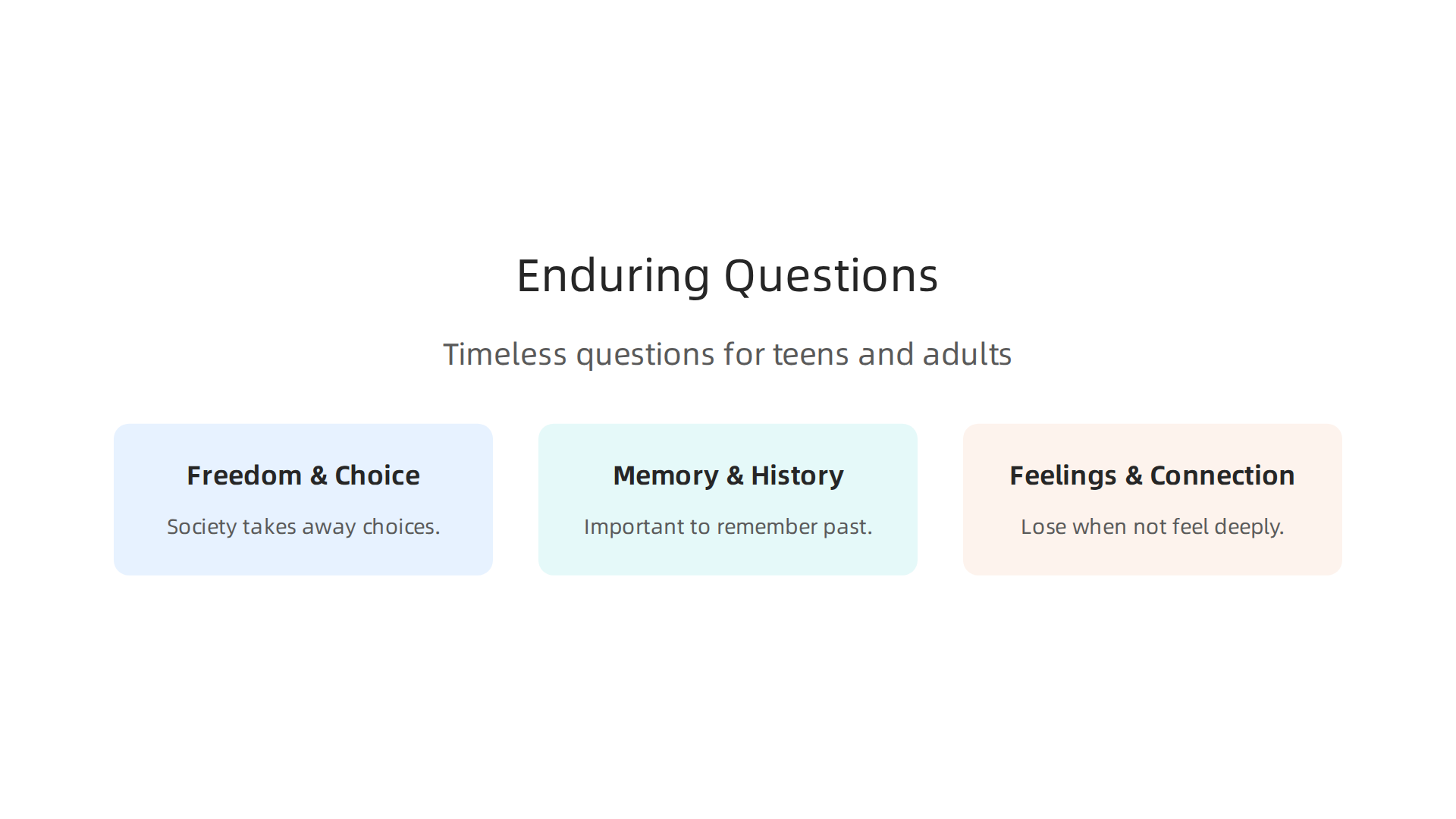
- Freedom and Choice: What happens when a society takes away choices to keep everyone safe? Is that truly a good thing?
- Memory and History: Why is it important to remember the past, even the painful parts?
- Feelings and Connection: What do we lose when we don’t feel deeply, or when everyone is forced to be the same?
These ideas are always important, no matter how old you are or what year it is. In 2026, people still grapple with these very same questions.
How Schools Use The Giver
The Giver is often taught in schools because it helps students think critically. Teachers find it useful for discussing society, rules, and how people interact. It helps young readers understand complex ideas in a way that feels real and personal to them. For example, teachers are encouraged to use books like this as a guide in their classrooms, helping students learn to think deeply about what they read A Phenomenological Study – LSU Scholarly Repository. This shows that the book is valued for making students reflect and grow.
The way the giver book has been received has changed a bit over the years. When it first came out, it made some people uncomfortable because of its strong themes. But over time, more and more people realized how important and thought-provoking it is. Today, it’s celebrated for its courage in exploring tough questions. This means new readers coming to the giver book in 2026 can join a big conversation about freedom, identity, and what makes a truly good life.
If you enjoy stories that make you think about other worlds and societies, you might like to explore more 10 dystopian novels like The Hunger Games. The Giver stands out even among the best fiction books. It’s a special book because it helps us look at our own world with fresh eyes, asking if what we have is truly the best way to live.
If you enjoyed how the giver book made you think about our world, you’re in luck! There are many other amazing books that also explore big ideas about society, freedom, and what it means to be human. Here are some contemporary reads that fans of The Giver often love in 2026:
- The Hunger Games Series by Suzanne Collins: This popular series puts you in a world where a powerful government controls its people through a cruel annual event. Just like Jonas in the giver book, the main character Katniss must make tough choices and fight for survival and freedom. It’s a story full of action, but also deep questions about fairness and rebellion. You can find many more like this in lists of YA Dystopian Novels.
- Uglies by Scott Westerfeld: Imagine a world where everyone is made "pretty" by surgery when they turn sixteen. This book explores what happens when a society tries to make everyone the same and perfectly happy, much like Jonas’s community. It makes you wonder what we lose when we try to remove all differences. For more ideas like this, check out some Best YA Dystopian Novels for Middle & High School.
- Scythe by Neal Shusterman: In this series, humanity has conquered death, and special people called Scythes are chosen to end lives to keep the population balanced. It asks big questions about power, ethics, and what it means to be alive when there’s no natural end. This book, like the giver book, makes you think hard about what a "perfect" society might truly cost.
These books, along with the giver book, are often considered some of the The Best Novels of 2023 that Actually Earned their Bestseller Status and continue to be relevant. While many books in this genre can be serious, sometimes you need a break from all the deep thinking! If you’re looking for a lighter, funnier read after exploring intense dystopian worlds, you might enjoy some Humorous YA books to read after Suzanne Collins’ dystopian series.
Want to dive into a different kind of sci-fi story, one that’s designed to make you smile and think? Need a Smarter Laugh?
After diving into other thought-provoking books, let’s turn back to the giver book itself. When you want to read or discuss this special story, it’s good to know about the different versions you might find.
Choosing the Right Edition
Just like there are different cars, there are often different versions, or "editions," of a book. For the giver book, you might see editions with different cover pictures. Some might have a special introduction written by the author, Lois Lowry, or someone who loves her work. This can give you fresh ideas before you even start reading. Other editions might have an afterword, which is a note at the end that shares more thoughts about the story. Sometimes, even the paper or size of the book can be different. These little extras can make your reading experience more unique. If you’re curious about the general terms, you can learn more about the simple ideas behind Novel Vs Book The Real Difference And Why It Matters.
What to Look for in Reading Guides
The Giver book is full of big ideas. Because of this, many people like to use reading guides or study helps. These guides are like having a helpful teacher by your side. They can point out important parts of the story, explain difficult words, and give you questions to think about.
- For Solo Readers: If you’re reading the giver book by yourself, a guide can help you understand the deeper meanings. It can ask questions that make you stop and think, like "What would I do in Jonas’s place?" Some guides even have activities to help you get more out of the story, like the ones used in classrooms for The Giver – Ms. Asaro’s Middle School Language Arts Class.
- For Book Clubs: If you’re part of a book club, reading guides are super helpful for starting good conversations. They offer Book club questions for The Giver that make sure everyone can share their thoughts about the characters, the community, and the ending. These questions often help everyone see new things in the story they might have missed before. They help readers think deeply and talk about important ideas.
When picking an edition or a guide, think about what you want from your reading journey. Do you want to just read the story, or do you want to explore every single detail and idea the giver book has to offer?
After picking your ideal edition or guide, it’s time to dive into the story and really think about it. The Giver book makes you ask many big questions. Having some ideas ready for discussion or activities can make your reading even better. This is true whether you’re reading alone, with family, or in a book club.
Simple Questions for Younger Readers and Families
For younger readers, or when reading the giver book together as a family, focus on the main parts of the story and how characters feel. Here are some easy questions to get started:
- What is "Sameness" in Jonas’s community? Do you think it makes life easier or harder?
- What is your favorite memory, and why do you think memories are important?
- How does Jonas change during the story? What does he learn?
- If you could choose your job like the children in the book, what job would you pick?
Some guides, like this Scholastic BookFiles: A Reading Guide to The Giver by Lois Lowry, even include special questions and activities perfect for classrooms.
Deeper Ideas for Teenagers and Individuals
If you’re reading the giver book by yourself or with older friends, you can dig into the story’s deeper meanings. These prompts help you think about big ideas:
- Is Jonas’s community a perfect place (a utopia) or a bad place (a dystopia)? Why do you think so?
- What does the story say about freedom and safety? Which is more important?
- How do feelings and colors add meaning to life? Imagine living without them.
- What part of the ending surprised you the most, and why?
These kinds of questions can really make you think about why this book is considered one of the best fiction books for growing up.
Book Club Prompts for Thoughtful Discussions
For book clubs, the giver book offers so much to talk about.

These prompts help everyone share their views and understand different parts of the story. For example, some great Book club questions for The Giver include asking about family roles and choices.
- The community tries to control feelings and memories. What do you think Lois Lowry is trying to tell us about control?
- Compare Jonas’s world to our world in 2026. What are some big differences? What are some small similarities?
- What does the concept of "release" mean to you after finishing the book?
- Are there other stories like this one that make you think about society’s rules?
If you enjoyed the giver book and its deep ideas about society, you might also like exploring other stories that make you think, like these 10 Dystopian Novels like The Hunger Games. Thinking about these questions and doing activities can help you remember the giver book for a long time.
Summary
This article is a reader-focused guide to Lois Lowry’s The Giver, explaining why the novel remains influential for students and adults in 2026. It summarizes the plot—Jonas’s selection as Receiver of Memory—and explains the book’s core themes like memory versus forgetting, freedom versus safety, and the importance of feeling. The piece places the book in historical and educational context, notes its original young-adult audience and lasting wider appeal, and shows how teachers use it to spark critical discussion. You’ll find guidance on characters and world-building to notice on a re-read, tips for picking editions and reading guides, and prompts for family, classroom, or book-club conversations. The article also recommends similar dystopian and YA titles to read next, so readers can continue exploring related ideas and debates. After reading, you’ll understand the novel’s key ideas, know what to look for in a second reading, and have concrete questions and book suggestions for further study.