

Ayn Rand Books Your Guide to Her Novels and Objectivist Philosophy
Overview
Introduction
Have you ever picked up a book everyone calls a masterpiece, only to feel lost after the first fifty pages? You are not alone. Ayn Rand remains one of the most polarizing and influential authors of the 20th century, with her books selling millions of copies worldwide. But for many new readers, jumping into her work feels like signing up for a marathon with no training.
Rand was a Russian-born American writer who developed a bold philosophy called Objectivism. She arrived in the United States in 1926 after growing up in St. Petersburg, Russia, where she witnessed the Russian Revolution firsthand. That experience shaped everything she later wrote. According to Britannica, she authored two best-selling novels that changed how people think about individualism and capitalism. Her Wikipedia entry notes that her early novels were not successful at first, but she kept writing until her voice broke through.
Here is the thing. Rand’s books are not light reading. Novels like The Fountainhead and Atlas Shrugged run long and pack in heavy ideas about morality, power, and human nature. Many readers start them with excitement and then feel overwhelmed by the dense philosophy and complex arguments.

If you have ever struggled through a difficult book, you know exactly how that feels. In fact, understanding the difference between a novel and other types of books can help you approach her work with the right mindset.
The Internet Encyclopedia of Philosophy describes Rand as a thinker whose ideas still spark debate today. Her biography on AynRandLexicon.com reveals that she taught herself to read at age six, showing early signs of the fierce independence she later championed. With such a powerful legacy, where do you even begin?
This article gives you a clear overview of her major books, her core philosophical ideas, and why her work still matters in 2026. We will walk through each important title without the confusion. By the end, you will know exactly which Ayn Rand books fit your interests and how to approach them without getting lost.
Of course, not every reading mood calls for heavy philosophy. If you ever need a break from intense ideas and want something completely different, we have lighter options too. Sometimes the best way to recharge is with a good laugh.
Who Was Ayn Rand? A Brief Biography
So who was this woman everyone argues about? Her real name was Alisa Zinovyevna Rosenbaum. She was born on February 2, 1905, in St. Petersburg, Russia. According to the Ayn Rand Lexicon, she taught herself to read at age six. By the time she was eight, she had already found her first fictional hero. That love for strong individuals shaped everything that came later.
Her family lived a comfortable middle-class life. But everything changed when the Russian Revolution tore through the country. She saw violence and chaos up close. The EBSCO research starters explain that this political upheaval shaped her views on government and society forever. She watched what happens when the collective is put above the individual. And she hated it.
In 1926, she made a bold choice. She left Russia and moved to the United States. Britannica notes that she arrived with little money but big dreams. She learned English quickly and started working in Hollywood as a screenwriter. Her first two novels did not sell well. Wikipedia mentions that these early works were not successful at first. But Rand never stopped writing. She believed in her ideas even when nobody else did.

Her personal story is the engine behind her fiction. The Internet Encyclopedia of Philosophy describes her as a thinker whose philosophy, Objectivism, came directly from her Russian experiences. Every page of her most famous ayn rand books pulls from her life. The Fountainhead (1943) is about a creative person who refuses to sell out his ideals. Atlas Shrugged (1957) is about the most productive people in society walking away from a world that does not value them.
If you usually read john green books or meg cabot books, do not expect the same fast pace here. Rand writes dense literary fiction books that ask you to think hard about your own values. They focus on ideas and arguments rather than quick entertainment. Honestly, if you are in the mood for something lighter, richard osman books deliver warm humor and clever puzzles without the heavy lifting.
Here is the thing. Knowing her background helps you read her work with more patience. You can see why she wrote the way she did. She was not trying to be difficult. She was trying to defend the individual against the crowd. That goal came straight from seeing the Russian Revolution crush so many people.
Of course, not every reading session needs to be a deep dive into philosophy. Sometimes you just want to rest your brain. There is no rule that says every book you pick up must change your life. If you ever feel overwhelmed by her heavy ideas, it is okay to take a break. You can always set her aside and enjoy a sci-fi comedy built to make you laugh first. A good laugh resets your mind and lets you come back stronger later.
"The Fountainhead": Individualism in Architecture and Life
Now let’s talk about the novel that made her famous. The Fountainhead was published in 1943. It tells the story of Howard Roark. He is an architect who refuses to compromise. He would rather lose a client than build something ugly. He would rather stand alone than join the crowd.
This book is the heart of ayn rand books. It is her clearest statement about what she believed. The story is a fight between two ideas. On one side, you have Roark’s individualism. On the other side, you have society’s collectivism. The EBSCO Research Starters explain that the novel explores "individualism versus collectivism" through Roark’s fight to build the way he wants.
The most powerful idea in the book is that your ego is a good thing. The Foundation for Economic Education highlights this radical claim: "man’s ego is the fountainhead of progress and achievement." Rand wanted you to see your own desires and creativity as noble. Roark does not feel guilty for being great. He feels proud.
The book has inspired millions of readers. The Atlas Society notes that it "provides a powerful inspiration to the individualist movement."

People read it and feel braver. They feel like they can stand up for their own ideas at work and in life. It became a lasting symbol of Rand’s philosophy of Objectivism.
Now, be honest about what you are getting into. This is a dense piece of literary fiction books. Rand’s writing style is unique. CliffNotes describes it as "as innovative as is Roark’s style of design." The Ayn Rand Institute calls the book "a timeless classic." But it is nothing like quick, light reads.
If you usually pick up john green books or meg cabot books for fast storytelling, prepare for a slower pace. The Fountainhead has long speeches. It dives deep into philosophy and architecture. It wants you to think hard about your own values. That is its strength. But it can also be exhausting.
A book this heavy asks a lot of you. After you close it, a change of pace can be refreshing. You can give your brain a playful treat next. If you are ready to laugh and reset, you can enjoy a sci-fi comedy built to make you laugh first. A good laugh is the perfect reward after working through such big ideas.
"Atlas Shrugged": The Epic Novel That Shook the World
After The Fountainhead made her name, Ayn Rand went bigger. In 1957 she published Atlas Shrugged, a massive novel that is both a mystery story and a full philosophical manifesto. It is one of the most talked-about ayn rand books of all time.
The book opens with a strange question: "Who is John Galt?" That phrase becomes a symbol of a world where the best minds, the productive people, start disappearing. They go on strike. They refuse to keep carrying a society that does not appreciate them. This idea, the strike of the productive, is the engine of the whole story.
The novel became a cultural earthquake. It has been cited by politicians, entrepreneurs, and activists from all sides. The philosophy it stands for, Objectivism, is laid out in full through the characters and their choices. As Britannica explains, Rand believed that all people are guided by philosophical principles, whether they know it or not. In Atlas Shrugged she shows what happens when those principles are taken to their logical end.
The scale of the book can be intimidating. It is a dense piece of literary fiction books that asks you to think hard about money, morality, and the value of your own work. The characters give long speeches. The plot twists through industries and across continents. It is not a fast weekend read.
If you make it through Atlas Shrugged, you will have earned a break. Your brain will need something lighter. That is the perfect time to pick up a funny book for adults that will make you laugh out loud. A good laugh is the best way to reset after wrestling with big ideas.
Actually, you might want to try a story that does the opposite of heavy philosophy: a clever sci-fi comedy that offers a playful escape. If you are ready to trade long speeches for a good chuckle, meet a series built to make you laugh first.
The Philosophy of Objectivism: Reason, Self-Interest, and Capitalism
You cannot separate Rand’s stories from her ideas. She built a complete philosophical system called Objectivism. It covers everything from how we know things to how we should run a country. According to Britannica, Rand believed that all people are guided by philosophical principles, whether they know it or not.
In her novels, she showed those principles in action.
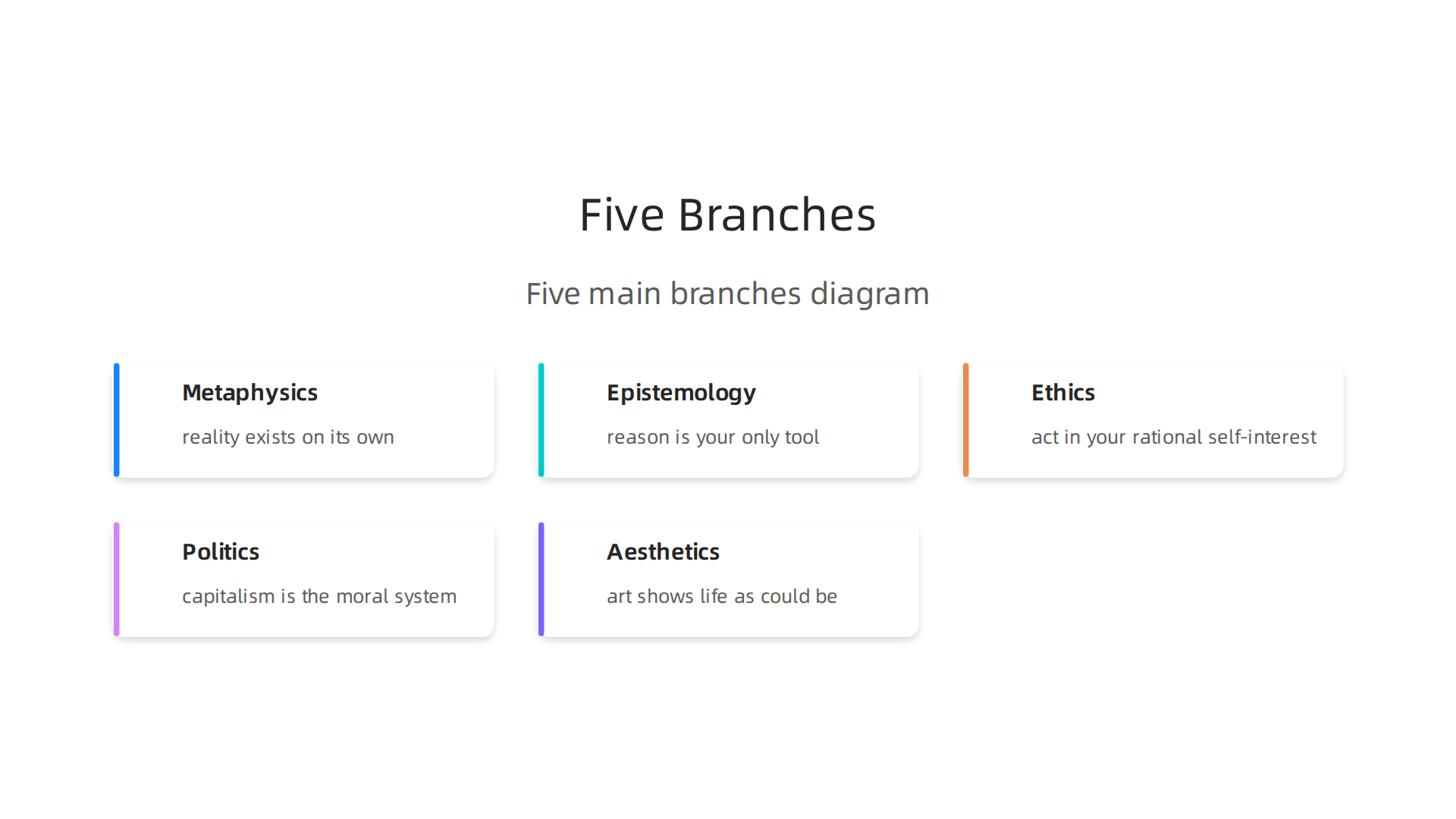
Objectivism has five main branches: metaphysics, epistemology, ethics, politics, and aesthetics.
Let me break those down simply.
Metaphysics says reality exists on its own. It is what it is. You cannot change a fact by wishing it away. This idea is often called the "primacy of existence."
Epistemology says reason is your only tool for gaining knowledge. You observe the world, you think logically, and you reach conclusions. As the Ayn Rand Society explains, for Rand epistemology is a normative discipline that shows you how to build conceptual knowledge from what you perceive.
Ethics is the part that gets people talking. Objectivism supports ethical egoism. That means you should act in your own rational self-interest. Your own life and happiness are your highest moral purpose. The Wikipedia page on Objectivism quotes Rand describing it as "the concept of man as a heroic being, with his own happiness as the moral purpose of his life." This does not mean hurting others. It means pursuing your own productive goals without sacrificing yourself to others or demanding that others sacrifice themselves for you.
Politics follows from ethics. If each person owns their own life, then the only moral political system is capitalism. People should be free to trade with each other by mutual consent. No force, no theft, no government handouts.
Aesthetics is the final branch. Art should show life as it could be. Rand’s novels are the perfect example of that. She used literary fiction books to make her philosophy come alive through characters and plots.
You might notice that Objectivism is not subtle. It is direct, bold, and full of confidence. That is why people either love it or hate it. Some critics, like those at LitKicks, argue that Rand’s ethical philosophy depends on a weak psychological foundation. But supporters say she created the only fully consistent moral system.
If you want a deeper dive into the arguments, check out this YouTube explanation of Objectivist ethics. It covers why values are objective and how they serve human life.
After all that serious thinking, you might crave something lighter. The philosophy of Objectivism asks you to think hard about your own values and choices. That is valuable work. But your brain also needs a break. When you are ready to switch gears, try a story that does the opposite of heavy philosophy. Love Clever Comedy? Get the strange, warm, sci-fi series behind the laughs.
Ayn Rand’s Literary Style: How She Wrote for Impact
Ayn Rand did not write just to entertain. She wrote to persuade. Every one of her ayn rand books feels like a stage for a debate. The characters argue. The narrator argues. Even the descriptions argue. That is intentional. Rand wanted her readers to walk away convinced of her worldview.
Her prose is dense and full of argument. As CliffsNotes points out, her writing style is as innovative as Howard Roark’s architecture. Most novelists tell you how a character feels. Rand shows you the chain of reasoning that led to that feeling. That makes her work feel more like a lecture than a story. Some readers love that focus. Others find it exhausting.
Rand called her method romantic realism.
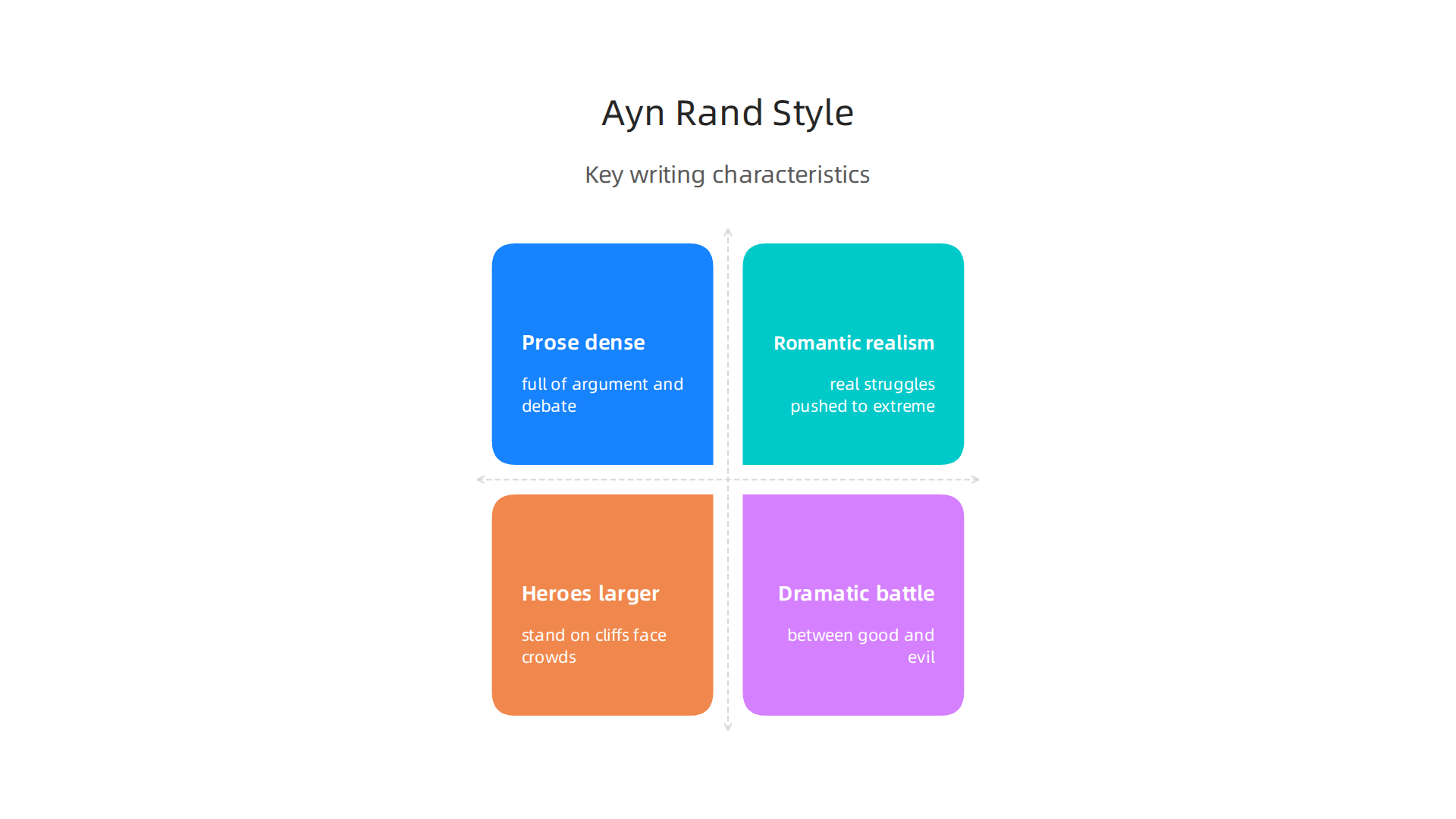
She took real human struggles and pushed them to the extreme. Her heroes are larger than life. They stand on cliffs, face down crowds, and never compromise. The opening of The Fountainhead shows Howard Roark at the edge of a granite cliff, and the imagery becomes "fantastical," as described in this analysis of Rand’s descriptive style. That is romantic realism in action. You do not read Rand to get a quiet slice of life. You read for a dramatic battle between good and evil.
This boldness brings both praise and criticism. Supporters at McSweeney’s call The Fountainhead a masterpiece that integrates theme, plot, and character. The FEE article notes that the central claim of the book — that man’s ego is the source of progress — is radical and powerfully delivered. Critics, however, argue that Rand’s style is too didactic. It lacks subtlety. Every scene serves the philosophy. There is rarely room for ambiguity or humor. That may be why readers who love other literary fiction books find her work heavy or preachy.
If you want to understand the impact of her style, try picking up The Fountainhead or Atlas Shrugged. Prepare for long speeches and intense debates. It can be rewarding, but it is not a light read. For a change of pace, you might enjoy a contrast. These funny authors offer a much lighter tone.
And if you need a smarter laugh, meet the sci-fi comedy built to make you laugh first. It gives your brain a break from all that heavy philosophy.
Criticisms and Controversies Surrounding Ayn Rand Books
With such a bold style, it makes sense that ayn rand books spark intense debate.

Many professional thinkers find her philosophy, Objectivism, far too simplistic. A common argument is that her ethical views rely on a weak understanding of human psychology, as noted in a critical analysis of her ideas. This leads to a system that critics say lacks empathy for real people facing real struggles.
Unlike the gentle mysteries of richard osman books or the emotional explorations found in john green books, Rand’s world is harsh and demanding. The main accusation is that she promotes selfishness and ignores systemic social problems. Her heroes do not have to worry about poverty or discrimination. This makes her feel out of touch to many.
However, her defenders, including scholars at the Ayn Rand Institute,

argue that critics consistently fail to interpret her work correctly. They say she offers a powerful moral framework for individual achievement. Some thinkers even take her seriously as a political economist, as explored in perspectives on her work. The truth is, as the Wait But Why article suggests, Rand is so controversial because her ideas cut deep into the heart of our culture. You either love her or hate her, but you cannot ignore her.
If all this heavy debate has drained you, a palate cleanser might help. A good laugh can reset your mood. Check out some funny books for adults that will make you laugh out loud for a lighter journey.
For a smarter laugh that still respects your brain, you do not have to choose between deep and fun. Love Clever Comedy? Get the strange, warm, sci-fi series behind the laughs.
The Enduring Legacy of Ayn Rand Books in Modern Culture
You might think a writer this controversial would fade away after a few decades. But here is the thing. Ayn rand books are still everywhere. They show up in political speeches, TV dramas, and even music lyrics. That staying power is rare for any author, especially one who died in 1982.
Think about how most literary fiction books find their audience. They usually sell well for a year or two, then drop off. Rand is different. Atlas Shrugged has sold over seven million copies and is still widely read, as Nautilus notes. The Fountainhead has moved more than eight million copies in over thirty languages, according to the Ayn Rand Institute. Those numbers put her in a league with the biggest sellers of all time.
Why Rand still matters today
Sales go up during tough times. When the economy wobbles or political debates heat up, people turn to her books. They want a clear moral framework. That is not something you see with richard osman books or john green books. Those authors offer comfort and connection. Rand offers a battle cry.
Her ideas also pop up in pop culture references you might not notice. Musicians sample her speeches. TV characters argue about her philosophy. The collectible market for her first editions is hot too. The AbeBooks report on most expensive sales in 2024 mentions that one dealer now holds the world’s largest private collection of signed Rand items. That kind of demand does not happen for a forgotten writer.
New readers find her every year
Social media changed how people discover ayn rand books. TikTok book clubs and Instagram debates introduce her to younger audiences. These are readers who might also enjoy meg cabot books for a lighter escape, but they come to Rand for something heavier. They want to wrestle with big ideas about self-interest, achievement, and freedom.
Some of them end up buying her nonfiction works like The Virtues of Selfishness or Capitalism: The Unknown Ideal, which are published by Penguin Random House.

The Ayn Rand Institute even runs a digital store that sold hundreds of books and courses in FY2024, as shown in their financial statements. The machine keeps running.
After all this heavy philosophy, your brain might need a break. If you want a smarter laugh that still respects your intelligence, you do not have to choose between deep and fun. Get the strange, warm, sci-fi series behind the laughs.
Summary
This article walks new readers through Ayn Rand’s life, major books, and the core philosophy she called Objectivism, so you can decide where to begin and how to read her without getting lost. It summarizes Rand’s background—born in Russia, shaped by the Revolution, emigrated to the U.S.—and explains why that history fuels her focus on individualism and capitalism. The piece breaks down her two signature novels, The Fountainhead and Atlas Shrugged, describing their plots, scale, and the common reading challenges they pose. It then lays out Objectivism’s five branches (metaphysics, epistemology, ethics, politics, aesthetics) in plain terms and shows how her didactic, dramatic style serves her arguments. The article covers major criticisms and why Rand remains controversial, while offering practical reading tips and lighter book alternatives for when you need a break. By the end you’ll know which of her works fits your interests, how to approach long philosophical passages, and where to look for gentler fiction that still rewards thoughtful readers.